
Aquablation Therapy for Enlarged Prostate: A Milestone in Advanced BPH Care
March 19, 2026 | 2 min read
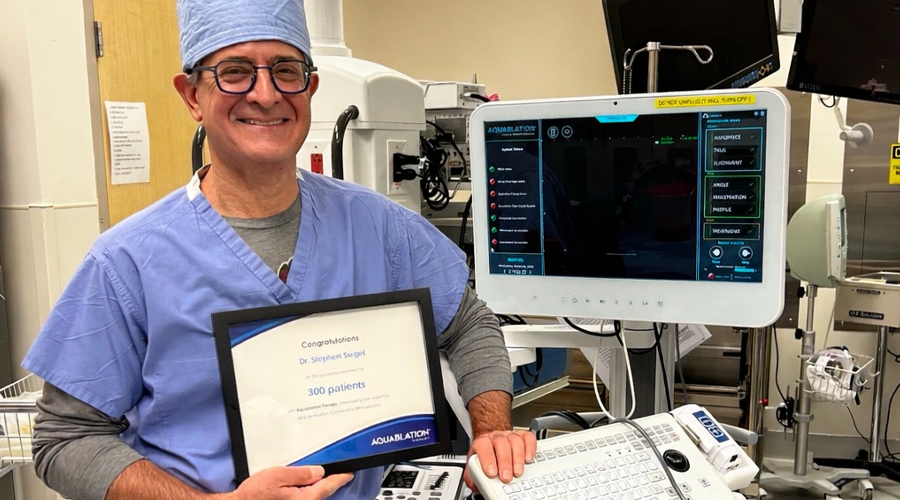
Board-certified urologist Dr. Stephen Siegel recently completed his 300th Aquablation therapy procedure in Boulder, marking a significant milestone in the treatment of benign prostatic hyperplasia (BPH), or enlarged prostate.
This achievement reflects both the growing demand for advanced BPH treatments and Dr. Siegel’s experience caring for patients throughout Boulder County.
Understanding Enlarged Prostate (BPH)
An enlarged prostate is a common part of aging for many men. BPH affects about half of men between the ages of 51 and 60 and up to 90% of men over age 80. When the prostate enlarges, it can press against the bladder and urethra, leading to symptoms such as:
- Frequent urination
- Urgent need to urinate
- Weak urinary stream
- Difficulty emptying the bladder
- Waking multiple times at night to urinate
These symptoms can significantly affect sleep, daily routines, and quality of life. If left untreated, BPH may lead to complications such as bladder stones, urinary retention, or kidney problems.
Many men delay treatment because they are concerned about potential side effects, such as incontinence or sexual dysfunction.
What Is Aquablation Therapy?
Aquablation® therapy is a minimally invasive, robotically guided procedure that removes excess prostate tissue using a heat-free waterjet.
Using detailed ultrasound imaging, surgeons create a personalized map of the prostate. The AquaBeam robotic system then precisely targets and removes the tissue causing urinary obstruction. Because the procedure does not use heat, it helps protect the surrounding nerves that control urinary and sexual function.
Proven Results with Low Risk of Long-Term Side Effects
Clinical studies show that Aquablation therapy offers significant symptom relief with very low rates of irreversible complications:
- 0% impact on erectile function or sexual satisfaction
- About 90% of men preserve their ejaculatory function
- 99% of men do not experience incontinence after treatment
These results make Aquablation an appealing option for men seeking symptom relief while minimizing the risk of long-term side effects.
What Patients Can Expect
Aquablation therapy is typically performed in the hospital, with most patients going home the next day. Recovery is usually quick, and many patients return to normal activities within a few days.
Temporary symptoms such as urinary urgency, mild burning with urination, or small amounts of blood in the urine may occur during recovery but usually resolve as healing progresses.
Let’s Talk
If you’re experiencing symptoms of an enlarged prostate, you may benefit from making an appointment with one of our experienced urologists to determine if Aquablation or another treatment may be appropriate.