
Navigating the “Pregnancy Plate”: Healthy Eating While Pregnant in Boulder County
April 10, 2026 | 4 min read
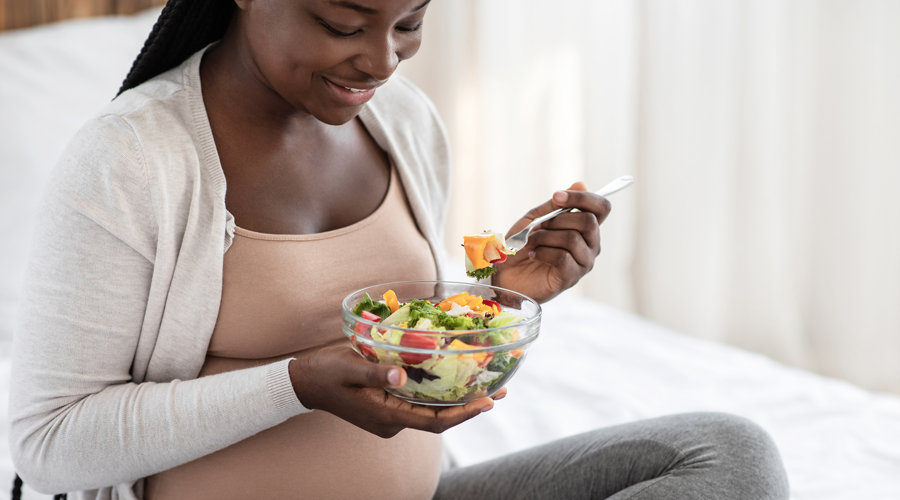
Congratulations! Whether you’re a first-time parent or adding another member to your team, pregnancy is a marathon, not a sprint. As an OB-GYN provider here at Boulder Medical Center, one of the most frequent questions I get during prenatal visits is: “Wait, can I actually eat that?”
The adage “eating for two” is a bit of a myth — it’s more about eating for quality. While Boulder is a hub for artisanal cheeses, farm-to-table dining, and fresh sprouts, pregnancy does require a few temporary adjustments to your menu to keep you and your baby safe.
The Power of Protein: How Much Do You Need?
Protein is the building block of your baby’s cells, supporting everything from brain development to a healthy birth weight. It also helps your own body adapt to a growing blood supply and changing tissues.
- The Goal: Most experts and the Dietary Guidelines for Americans recommend aiming for 71 grams of protein per day, especially in the second and third trimesters.
- Trimester Shift: While your needs in the first trimester are similar to pre-pregnancy (around 46 grams), that requirement jumps significantly as your baby begins their most rapid growth phases.
- Visualizing the Math: 71 grams might sound like a lot, but it’s manageable when spread across your day. For perspective:
- One chicken breast (~3 oz): 26g
- One cup of Greek yogurt: 15-20g
- One large egg: 6g
- Half a cup of lentils: 9g
If you choose to add protein powder, I recommend a non-hormonal, plant-based option, the best of which is pea protein. Vanilla flavor contains fewer heavy metals than chocolate flavor, and the powder should be third-party tested.
“Green Light” Foods: What to Prioritize
Focusing on nutrient density is key. During pregnancy, your body needs more folic acid, iron, calcium, and, as noted above, protein.
- Leafy Greens & Colorful Veggies: Spinach and kale are folic acid powerhouses. Aim for a rainbow on your plate to ensure a variety of vitamins.
- Lean Proteins: Lean beef, poultry, eggs, and legumes are essential. Ensure all meat is cooked to the proper internal temperature.
- Pasteurized Dairy: Greek yogurt and hard cheeses are excellent sources of calcium and protein. Just check the label to ensure they are pasteurized.
- Cooked Seafood: Low-mercury fish like salmon, trout, and sardines are rich in Omega-3 fatty acids, which are vital for fetal brain development.
“Red Light” Foods: What to Avoid
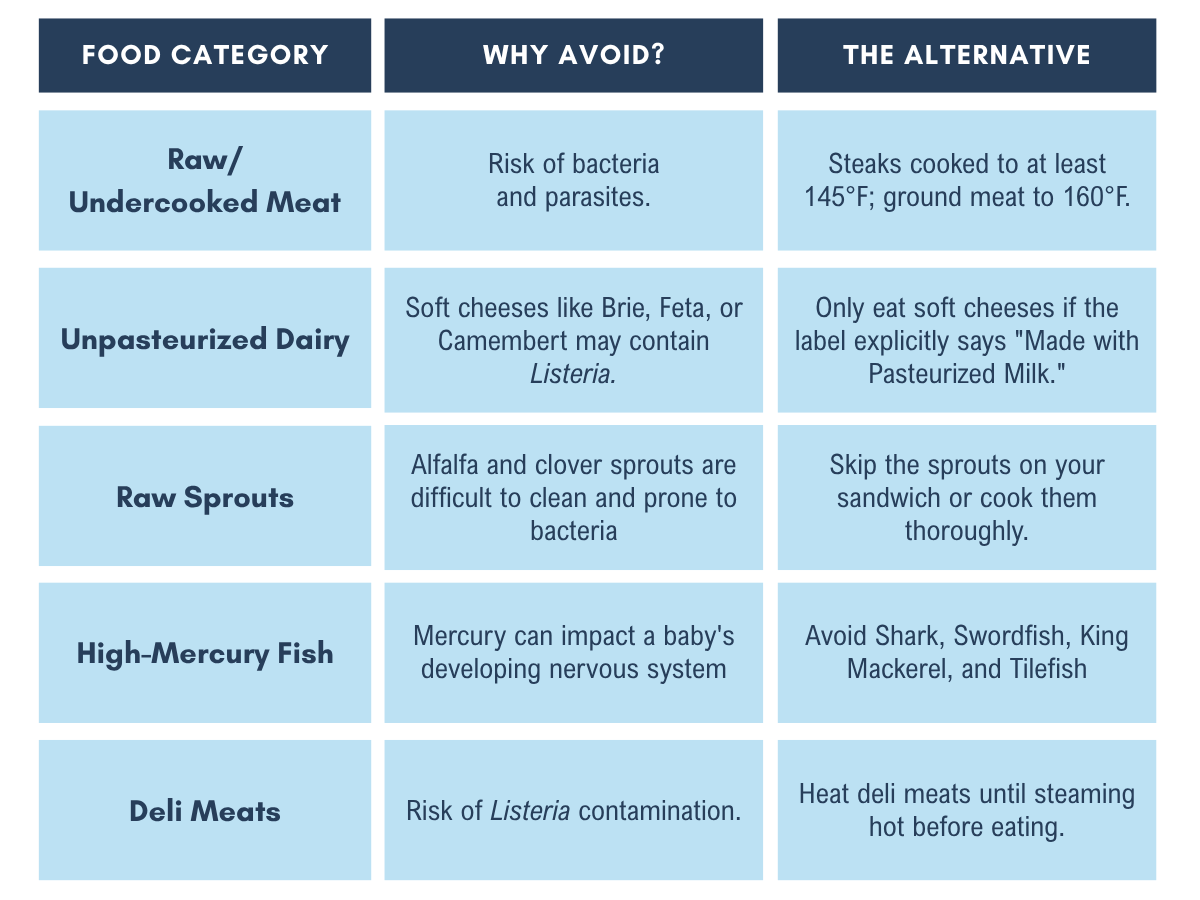
To minimize the risk of foodborne illnesses like Listeria, Salmonella, and Toxoplasmosis, I recommend skipping or modifying the following:
Yellow Light Foods: Practice Moderation
- Caffeine: You don’t have to give up your morning cup! However, I recommend limiting caffeine intake to under 200mg per day (roughly one 12-ounce cup).
- Herbal Teas: Most are fine, but some herbs can stimulate uterine contractions. Stick to peppermint, ginger, or raspberry leaf (in the third trimester), and I advise my patients to check with their herbal teas they are drinking.
A Note on our “Boulder County Lifestyle”
In such a health-conscious community, many of my patients enjoy raw juices, kombucha, and farm-fresh eggs. During pregnancy, the safest bet is to choose pasteurized juices and ensure that farm-fresh eggs are cooked until the yolks are firm.
- Pro-Tip:
Wash all produce, even organic and “pre-washed” bags, thoroughly under running water to remove any lingering soil or bacteria. - When to Call Your OB-GYN Provider:
If you accidentally eat something on the “no” list, don’t panic. Most of the time, everything is perfectly fine. However, I encourage my patients to reach out to their care team immediately if they develop flu-like symptoms, fever, or severe upset stomach after eating a high-risk food.
Healthy Eating is About Balance, Not Perfection
Focus on whole foods, stay hydrated, and enjoy this incredible journey! For further information, a great resource is Jessica Knurick, a nutritionist and PhD, on Instagram or through her website.
Let’s Talk
Just tested positive or think you might be pregnant? Start your care early with Dr. Andrea Burgess. Pregnancy confirmation visits are an important first step, giving you answers, guidance, and a clear plan for what comes next. Schedule your visit today with Dr. Burgess in Boulder or Longmont, Colo. and begin your pregnancy journey with a provider who will be with you every step of the way.