
Keratosis Pilaris: What Are These Tiny Bumps on My Arms?
June 18, 2026 | 7 min read
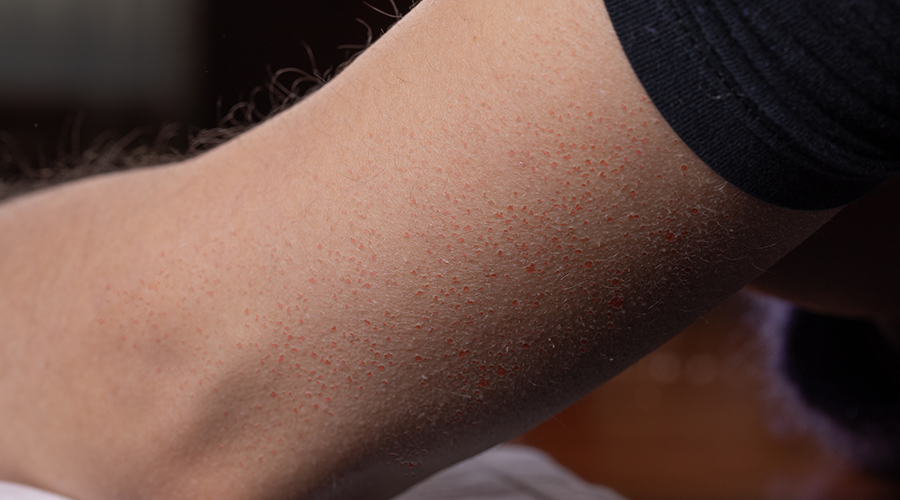
Keratosis pilaris (KP) is a common skin condition that causes small, rough bumps on the arms, thighs, cheeks, or buttocks. Although harmless, these tiny bumps can be frustrating and difficult to manage. In this article, Laura Norman, PA-C, a dermatology provider at BMC, explains the causes of keratosis pilaris, common symptoms, effective treatment options, and when to see a dermatologist.
Have you noticed small, rough bumps on the backs of your arms? You might have keratosis pilaris, a common, harmless skin condition. Here’s what you should know, from its causes to the best ways to manage it.
What Is Keratosis Pilaris?
Keratosis pilaris (KP), sometimes called “chicken skin” or “strawberry skin,” is a common, benign (harmless) condition where tiny, rough bumps appear on the skin. These bumps are caused when a buildup of keratin, a protein that normally protects the skin, plugs the openings of hair follicles.
The result is small, skin-colored, reddish, or slightly darkened bumps that can make the skin feel rough or sandpapery. KP is not contagious, dangerous, or a sign of poor hygiene. It is also separate from eczema, although the two can frequently co-occur.
Where Does Keratosis Pilaris Appear?
The most common locations include:
- Upper arms (backs and outer sides). The most common location, affecting more than 90% of people with KP
- Thighs and legs. Approximately 59% of cases.
- Cheeks and face. Seen in about 41% of cases, and are more common in children and adolescents.
- Buttocks. Roughly 30% of cases.
Less commonly, KP can appear on the trunk, neck, or even the eyebrows.
Who Gets Keratosis Pilaris?
Studies estimate KP affects roughly 40–50% of adults and up to 50–80% of adolescents. It can affect people of all races, ethnicities, and sexes and may appear at any age. However, onset is most common in childhood, with more than half of cases beginning before age 10 and another third beginning during the teenage years.
Key risk factors include:
- Dry skin and eczema (atopic dermatitis). People with a history of eczema, asthma, or allergic rhinitis are significantly more likely to develop KP. However, KP is not considered eczema.
- Family history. KP tends to run in families and is thought to follow an autosomal dominant inheritance pattern, meaning if one parent has it, there’s a good chance their children will too.
- Higher body mass index (BMI). Research has found a strong association between higher BMI and KP.
What Causes Keratosis Pilaris?
The exact cause of KP is not fully understood, but research has identified several contributing factors:
- Keratin buildup. Excess keratin plugs the hair follicle openings, creating the characteristic bumps.
- Sebaceous (oil) gland abnormalities. Studies have found that KP lesions often lack normal oil glands, which may be an early step in the condition’s development. Without adequate oil production, the skin around the follicle becomes dry and prone to plugging.
- Skin barrier dysfunction. The outer layer of skin in KP-affected areas exhibits impaired barrier function, contributing to dryness and roughness.
- Genetic factors. Mutations in the filaggrin gene, the same gene linked to eczema and ichthyosis vulgaris, are found in about 35% of patients with KP. However, many people with KP have no filaggrin mutation, so other genetic pathways are also involved.
Does Keratosis Pilaris Go Away on Its Own?
KP often improves with age, especially for those whose cheeks are affected. In one long-term study, about 35% of patients saw improvement over time, with the average age of improvement around 16 years. However, 43% of patients found their KP stayed about the same, and 22% reported it worsened over time.
Many people also notice a seasonal pattern. About 80% of KP patients report that their skin changes with the seasons. Nearly half improve during the summer months, and a similar proportion worsen during winter, likely due to lower humidity and drier air.
How Is Keratosis Pilaris Treated?
While there is no permanent cure for keratosis pilaris (KP), a variety of treatments can significantly improve the skin’s appearance and texture. Treatment focuses on two primary goals: gently exfoliating the keratin plugs that cause the bumps and restoring moisture to support a healthy skin barrier. Many over-the-counter products combine both exfoliating and moisturizing ingredients, making treatment simple and effective.
Everyday Tips for Managing Keratosis Pilaris
Consistency is one of the most important parts of managing keratosis pilaris. While treatments can help smooth the skin and reduce the appearance of bumps, KP often returns when treatment is discontinued. Regular moisturizing and consistent use of recommended skincare products can help maintain results and improve skin appearance over time.
- Moisturize immediately after bathing, while the skin is still slightly damp, to lock in hydration.
- Use lukewarm water. Hot showers and baths strip natural oils from the skin and can worsen KP.
- Choose gentle, fragrance-free cleansers. Harsh soaps can dry out the skin and aggravate bumps.
- Use a humidifier during dry winter months to add moisture to indoor air.
- Avoid picking or scratching the bumps, which can lead to irritation, darkening, or scarring.
- Wear loose, breathable clothing over affected areas to minimize friction.
Over-the-Counter Moisturizing and Gentle Exfoliation for Keratosis Pilaris
Over-the-counter moisturizing and gentle exfoliation are the foundation of keratosis pilaris treatment and the best place for most people to start. There are many effective options available, and the right choice often comes down to personal preference and how your skin responds. Many people see noticeable improvement with consistent use of one or more of the products listed below.
Urea creams
Urea is a natural moisturizing factor that acts as both a humectant and a gentle exfoliant.
Recommended products:
- Cetaphil Exfoliating Rough and Bumpy Cream (20% urea)
- Eucerin Roughness Smoothing Cream (10% urea)
- La Roche-Posay Lipikar Roughness Smoothing Lotion (10% urea).
Note: Higher-strength 40% urea creams can be helpful for thick, rough skin on the feet, but are generally too strong for most other areas of the body.
Lactic acid creams or lotions
Lactic acid is an alpha-hydroxy acid (AHA) that gently dissolves keratin plugs while also hydrating the skin.
Recommended products:
- AmLactin Daily Nourish Body Lotion Unscented (12% lactic acid)
- AmLactin Intensive Healing Body AHA Cream (15% lactic acid)
Salicylic acid
Contains a beta-hydroxy acid (BHA) that penetrates the pore to dissolve keratin plugs.
Recommended products:
- CeraVe SA Cream for Rough and Bumpy Skin (also contains lactic acid)
- Cetaphil Gentle Exfoliating SA Body Lotion
Glycolic acid
Another AHA that has demonstrated efficacy in improving KP.
Recommended products:
- The Ordinary Glycolic Acid 7% Exfoliating Toner
Prescription Topical Treatments for Keratosis Pilaris
If over-the-counter options aren’t effective, a dermatology provider may recommend:
Topical retinoids (such as tretinoin or adapalene)
These vitamin A derivatives promote skin cell turnover and can help prevent follicular plugging. They may cause dryness or irritation initially, so starting slowly is important.
Topical corticosteroids
These anti-inflammatory medications can help reduce redness and irritation during flare-ups. Because long-term use can cause side effects, they are typically prescribed for short-term treatment.
When Should You See a Dermatology Provider for Keratosis Pilaris?
Keratosis pilaris is harmless and often improves with a consistent routine of gentle exfoliation and daily moisturizing. Many people see meaningful improvement with over-the-counter products containing urea, lactic acid, or salicylic acid. However, it may be helpful to see a dermatology provider if:
- Over-the-counter treatments have not improved your skin after 6–8 weeks of consistent use
- The bumps are widespread, very red, itchy, or cause significant distress
- You’re unsure whether the bumps are actually keratosis pilaris, as conditions such as eczema, folliculitis, and other skin disorders can look similar
The most important thing to remember is to be patient and consistent. KP management is a marathon, not a sprint, but with the right routine, smoother skin is achievable.
Let’s Talk
If rough, bumpy skin is affecting your confidence or not improving with over-the-counter treatments, the dermatology team at Boulder Medical Center can help. Our board-certified dermatologists and advanced practice providers offer personalized treatment plans for keratosis pilaris and other skin conditions.
Schedule an appointment in Boulder, Louisville, or Longmont to discuss your symptoms and treatment options.