
Penicillin Allergy Testing: Is Your Penicillin Allergy Real?
January 29, 2026 | 4 min read
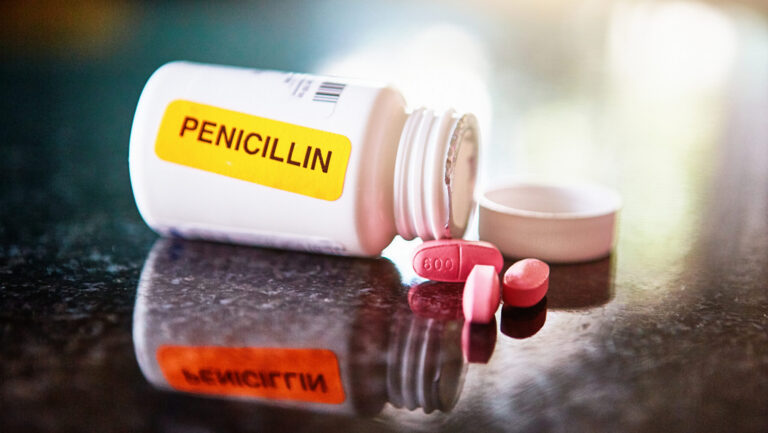
If you’ve been told you’re allergic to penicillin, especially if it happened years ago or when you were a child, there’s a good chance you’re not actually allergic. In fact, over 95% of people labeled as “penicillin allergic” can safely take penicillin.
Penicillin allergy testing can be discussed with your Boulder Medical Center primary care provider or allergy specialist. We also offer recurring Penicillin Allergy Clinics for patients seeking a dedicated testing visit and to help patients determine whether a true allergy exists using safe, evidence-based testing.
Schedule a Visit to Our Penicillin Allergy Clinic in Louisville
- When: 2nd Friday morning of each month beginning in March 2026
- Address: 80 Health Park Dr., Suite 200
- How to Schedule: Call (303) 440-3083 for an appointment
- BMC accepts most major insurance plans
How a Penicillin Allergy Label Can Affect Your Health
Having a penicillin allergy label in your medical record isn’t harmless. It affects your health in ways you might not realize. You:
- Receive less effective antibiotics when you get sick, leading to higher treatment failure rates
- Face increased risk of serious infections, including C. difficile (a dangerous intestinal infection)
- Have higher healthcare costs and longer hospital stays
- Are at increased risk for antibiotic-resistant infections like MRSA
- May have worse surgical outcomes because you can’t receive the best preventive antibiotics
Studies show that patients with penicillin allergy labels actually have higher mortality rates—particularly over the long term.
The Truth About Penicillin Allergies
The research shows:
- About 10% of people report penicillin allergies, but less than 5% are truly allergic
- 80% of people lose their penicillin sensitivity after 10 years, even if they were truly allergic once
- Most childhood “penicillin allergies” were actually viral rashes, not drug reactions
- Many reported reactions were just upset stomach or other non-allergic symptoms
What to Expect During Penicillin Allergy Testing
At the BMC Penicillin Allergy Clinic, our allergy specialists use evidence-based protocols to determine whether a true penicillin allergy is present:
- Most patients complete a simple direct oral challenge, with no needles or complicated testing
- The process is safe and efficient, with severe reactions being exceedingly rare (less than 0.1%)
- More than 95% of patients tested are successfully “de-labeled” and cleared to use penicillin
Who Should Get Tested?
Penicillin allergy testing is available for adults and children. You our a family member should consider testing if you:
- Were diagnosed with a penicillin allergy in childhood or more than 10 years ago
- Don’t remember what happened, or the details are vague
- Had a reaction that was just a rash, upset stomach, or itching
- Have a family history of penicillin allergy, but have never taken it yourself
- Have frequent infections requiring antibiotics
- Are scheduled for surgery
- Are pregnant or planning a pregnancy
Penicillin allergy testing can bring clarity and reassurance to your healthcare. Many patients leave with their allergy label removed, opening access to the safest and most effective antibiotics when needed.
Penicillin allergy delabeling is recognized by the World Health Organization as a cornerstone of antimicrobial stewardship and is recommended by major medical societies, including the American Academy of Allergy, Asthma, and Immunology.
References
- Evaluation and Management of Penicillin Allergy: A Review. Shenoy ES, Macy E, Rowe T, Blumenthal KG. JAMA. 2019;321(2):188-199. doi:10.1001/jama.2018.19283.
- Reaction Risk to Direct Penicillin Challenges: A Systematic Review and Meta-Analysis. Blumenthal KG, Smith LR, Mann JTS, et al. JAMA Internal Medicine. 2024;184(11):1374-1383. doi:10.1001/jamainternmed.2024.4606.
- Efficacy of a Clinical Decision Rule to Enable Direct Oral Challenge in Patients With Low-Risk Penicillin Allergy: The PALACE Randomized Clinical Trial. Copaescu AM, Vogrin S, James F, et al. JAMA Internal Medicine. 2023;183(9):944-952. doi:10.1001/jamainternmed.2023.2986.
- Drug Allergy: A 2022 Practice Parameter Update. Khan DA, Banerji A, Blumenthal KG, et al. The Journal of Allergy and Clinical Immunology. 2022;150(6):1333-1393. doi:10.1016/j.jaci.2022.08.028.
For Providers
- Penicillin Allergy Testing for Cardiac Patients
- Penicillin Allergy Testing for Dermatology Patients
- Penicillin Allergy Testing for Family Medicine Patients
- Penicillin Allergy Testing for Infectious Disease Patients
- Penicillin Allergy Testing for Internal Medicine Patients
- Penicillin Allergy Testing for OB-GYN Patients
- Penicillin Allergy Testing for Orthopedic Patients
- Penicillin Allergy Testing for Pediatric Patients
- Penicillin Allergy Testing for Dental Patients
Disclaimer: This article is intended for general informational purposes only and is not a substitute for professional medical advice, diagnosis, or treatment. Always seek the guidance of your physician or another qualified healthcare provider with any questions you may have regarding a medical condition. If you are experiencing severe or worsening symptoms, seek immediate medical attention.