
Safe Listening: How to Protect Your Hearing at Concerts, Work and Everyday Activities
August 13, 2026 | 6 min read
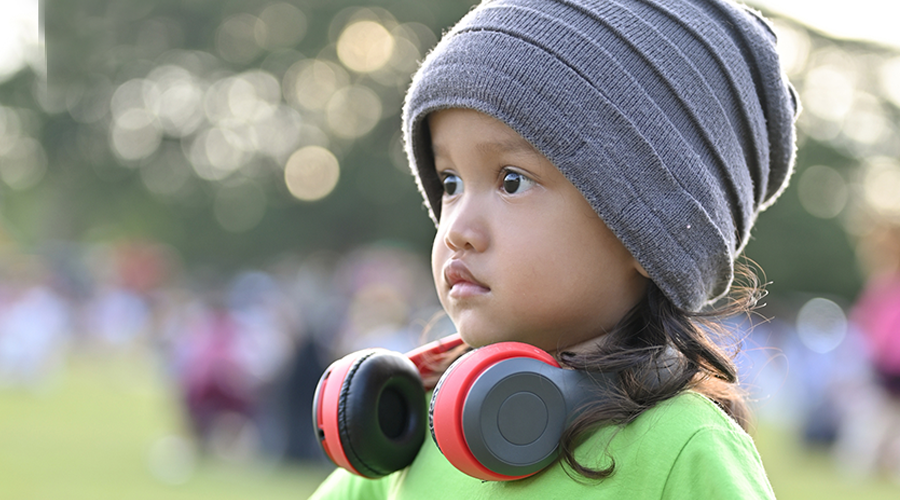
Loud sounds are part of everyday life. Concerts, festivals, sporting events, fireworks, fitness classes, power tools, lawn equipment, and noisy workplaces can all expose children and adults to sound levels that may damage hearing.
The good news is that noise-induced hearing loss is preventable. By understanding when sound may be too loud and taking a few simple precautions, people can enjoy their favorite activities while protecting their hearing for the future.
“Noise-induced hearing loss is preventable, but once it occurs, it is irreversible,” says Olivia Ruggiano, Au.D, an audiologist at Boulder Medical Center. “That is why it is important to think about hearing protection before entering a loud environment, not after symptoms appear.”
What Is Noise-Induced Hearing Loss?
Noise-induced hearing loss occurs when loud sounds damage the delicate structures within the inner ear. It may result from one extremely loud sound, such as an explosion, or from repeated exposure over time.
According to the American Speech-Language-Hearing Association (ASHA), an estimated 1 in 8 children and 1 in 4 adults in the United States have hearing loss caused by excessive noise exposure. Although the condition can affect anyone, the risk can be reduced through safe listening habits and hearing protection.
Sound is measured in decibels, or dBA. ASHA notes that sounds at 70 dBA or lower are generally safe for extended listening. Sounds at approximately 80 dBA for adults or 75 dBA for children may place hearing at risk depending on how long and how often someone is exposed. As sound levels rise, the amount of time a person can safely listen decreases.
For example, the sound from a concert, power tool, sporting event, or piece of industrial equipment may reach potentially harmful levels. A single loud blast, such as a firework or gunshot, can cause immediate damage.
Where Can Harmful Noise Exposure Occur?
Many people associate hearing damage with concerts, but potentially harmful noise can occur in recreational, occupational and everyday settings.
Examples include:
- Concerts, music festivals and nightclubs
- Fireworks displays
- Sporting events and stadiums
- Fitness classes with amplified music
- Air shows, airports and work around aircraft
- Construction sites and manufacturing facilities
- Landscaping equipment, including lawn mowers and leaf blowers
- Power tools and woodworking equipment
- Motorcycles, snowmobiles and other recreational vehicles
- Recreational shooting and hunting
- Loud toys, gaming headsets and personal listening devices
People who regularly work around loud machinery, aircraft, tools or amplified music may experience repeated exposure that adds up over time. Workplace hearing-protection requirements should always be followed, even when the noise does not feel uncomfortable.
How to Protect Your Hearing
Wear appropriate hearing protection.
Use earplugs, protective earmuffs, or both when sound levels are high. Younger children may find well-fitting earmuffs easier and safer to use than earplugs.
Different environments may require different forms of protection. Musicians’ earplugs, for example, are designed to reduce overall sound levels while preserving more of the clarity of music. People exposed to loud noise at work should use the protection recommended by their workplace safety program.
“Having ear protection available makes it much more likely that it will be used,” Dr. Ruggiano says. “Keep earplugs in a purse, backpack, car or tool kit so they are easy to reach when an environment is louder than expected.”
Move away from the sound.
Distance can significantly reduce sound exposure. Avoid standing directly beside speakers, machinery, fireworks launch areas, or other loud sound sources.
ASHA recommends remaining at least 500 feet away from very loud sources such as fireworks. At concerts and festivals, choose a location away from speakers whenever possible.
Check the sound level.
A sound-meter app can provide an estimate of the noise level in a public place. While an app does not replace calibrated equipment used in occupational settings, it can help people recognize when sound may be louder than they realize.
Another simple warning sign is needing to raise your voice to be heard by someone nearby. If normal conversation is difficult, consider moving farther away, lowering the volume, or using hearing protection.
Lower the volume.
Keep the volume on headphones and earbuds below half of the device’s maximum setting when possible. If someone nearby can hear sound coming from the headphones, the volume may be too high.
Volume is only part of the equation. The length of a listening session also matters, so even moderately loud audio should not be played continuously for hours.
Take listening breaks.
Step into a quieter area or remove headphones for a few minutes every hour. According to ASHA, even short listening breaks can help reduce a person’s overall noise exposure.
Quiet breaks can be especially helpful during concerts, festivals, sporting events, and long work shifts in noisy environments.
Use noise-canceling headphones appropriately.
On an airplane or in another loud setting, people may turn up their music to overcome the background noise. Noise-canceling headphones can reduce that competing noise, making it easier to listen comfortably at a lower volume.
However, noise-canceling headphones are not a substitute for properly rated hearing protection around hazardous workplace noise, machinery, fireworks or firearms.
Protecting Children’s Hearing
Children may be exposed to loud sounds through earbuds, gaming headsets, concerts, sporting events, fireworks and noisy toys. Because children may not recognize that a sound is too loud, adults should help manage both volume and listening time.
Consider using volume-limiting headphones, checking device settings and providing child-sized protective earmuffs for loud events. Adults should also model safe listening by wearing hearing protection themselves.
“Hearing protection can become as routine as sunscreen or a bike helmet,” Dr. Ruggiano says. “When children see adults using it consistently, it becomes a normal part of preparing for a loud activity.”
When Should You Schedule a Hearing Check?
Temporary muffled hearing or ringing in the ears after a loud event is a sign that the sound exposure was excessive. Even if the symptoms improve, they should not be considered a normal consequence of attending a concert or working in a noisy setting.
Consider scheduling a hearing evaluation if you or your child experiences:
- Ringing, buzzing, or other sounds in the ears after a loud event, particularly if they do not resolve within a few days
- Difficulty understanding speech in background noise
- Difficulty hearing in quiet environments
- Sounds that seem muffled or distorted
- Ear pain or sensitivity to sound
- A sudden change in hearing
Sudden hearing loss should be treated as urgent and evaluated promptly.
A baseline hearing evaluation can also be helpful for people who routinely work or participate in activities around loud noise. It gives the audiologist a point of comparison for monitoring changes over time.
Let’s Talk
If you have noticed ringing, sound distortion, or difficulty hearing, or would like to establish a baseline hearing test, schedule an appointment with the Boulder Medical Center Audiology team. We provide personalized hearing care for children and adults in Boulder and Louisville.