
When Hearing Aids Aren’t Enough: Understanding Cochlear Implants
May 13, 2026 | 4 min read
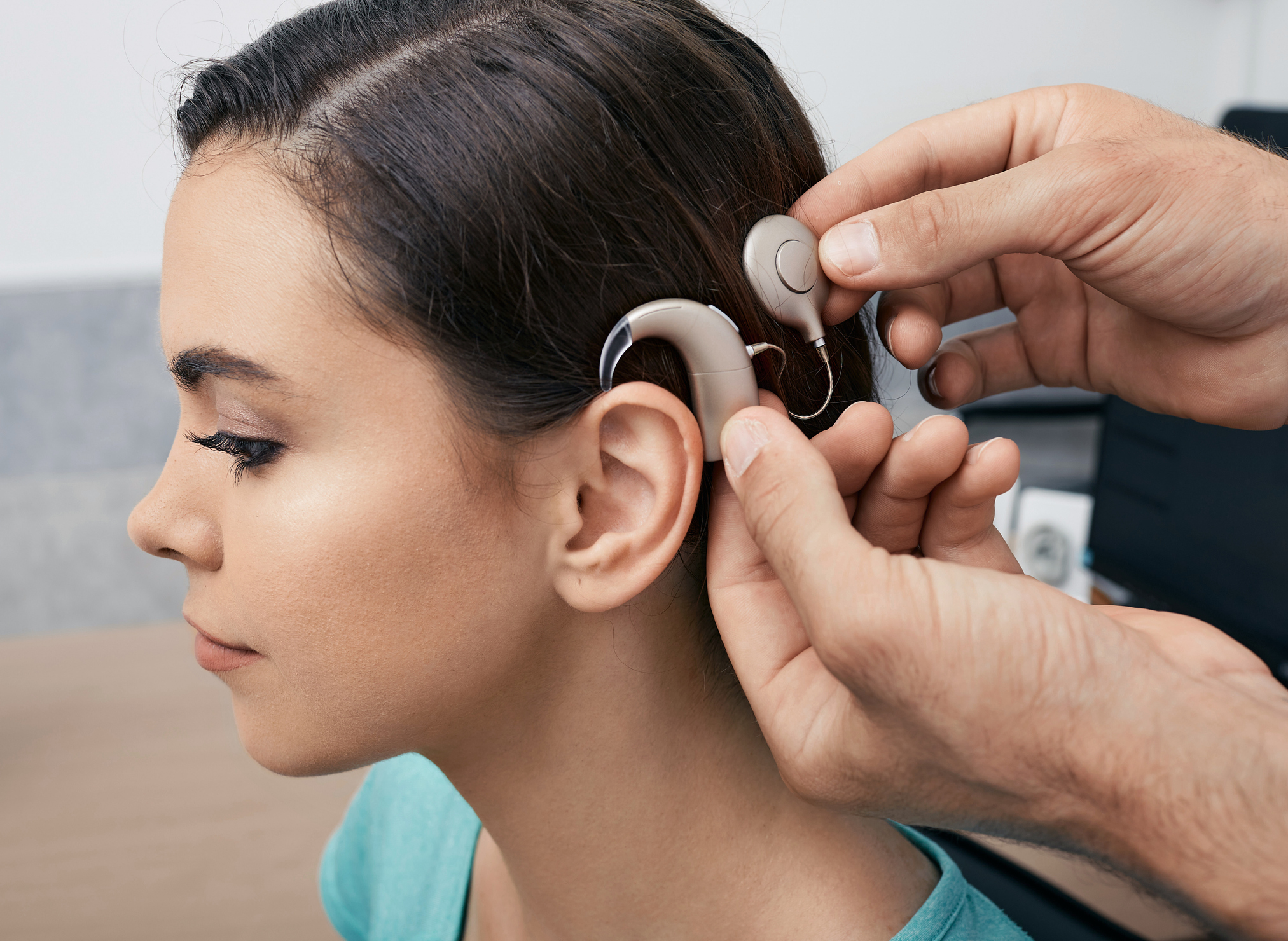
Many people with hearing loss wonder whether hearing aids are still providing enough benefit, especially when conversations become harder to follow, or speech sounds unclear, even with amplification. According to Natalie Raden, Au.D., one of the most common questions patients ask is how cochlear implants differ from hearing aids and when it may be time to consider an evaluation.
Hearing Aids vs. Cochlear Implants
Hearing aids are devices worn in or behind the ear that provide frequency-specific amplification based on an individual’s hearing loss. Sound is captured by microphones, processed by the device’s software, and then delivered into the ear canal.
From there, sound travels through the eardrum and middle ear before reaching the inner ear, known as the cochlea. Inside the cochlea, tiny hair cells convert sound vibrations into electrical signals that travel along the auditory nerve to the brain, where sound is interpreted.
As hearing loss progresses and damage to these hair cells becomes more severe, hearing aids may no longer provide sufficient clarity, especially for speech understanding.
A cochlear implant works differently from hearing aids. Rather than simply amplifying sound, a cochlear implant bypasses the damaged hair cells in the inner ear and directly stimulates the auditory nerve. This creates a different pathway for sound signals to reach the brain and may provide clearer speech understanding for some people with significant hearing loss.
How Do You Know When Hearing Aids Aren’t Enough?
Hearing aids are an excellent tool for many people with hearing loss. However, there are times when hearing aids may no longer provide enough benefit.
It may be time to consider a cochlear implant evaluation if:
- Speech sounds unclear even while wearing hearing aids
- Conversations are difficult to follow, especially in background noise
- You frequently ask people to repeat themselves
- You rely heavily on lip-reading
- You have moderate-to-profound hearing loss in both ears
- You have normal hearing in one ear and profound hearing loss in the other ear
For many patients, the biggest frustration is not simply volume; it is clarity and speech understanding.
A cochlear implant evaluation can help determine whether this technology may improve communication and hearing outcomes.
What Is a Cochlear Implant and How Is It Implanted?
A cochlear implant is a medical device designed for people with significant hearing loss who receive limited benefit from hearing aids.
The system has two main parts:
- An external sound processor worn behind the ear
- An internal device that is surgically implanted under the skin and connected to the cochlea in the inner ear
During surgery, a surgeon places the implant’s internal portion beneath the skin behind the ear and inserts a small electrode array into the cochlea. The device works by bypassing damaged hair cells in the inner ear and directly stimulating the auditory nerve.
After surgery and healing, the external sound processor is programmed by an audiologist and adjusted over time based on the patient’s hearing needs and progress.
Cochlear implant surgery is typically performed as an outpatient procedure, meaning most patients go home the same day.
Will Hearing Sound Normal After Cochlear Implant Surgery?
Cochlear implants provide a very different way of hearing the world, and adjustment takes time.
Many people describe sounds as robotic or unnatural at first. With consistent daily use, often 10 or more hours per day, the brain gradually adapts to the new signals.
Most people begin noticing improvement within several months, with significant gains in speech recognition often occurring between 6 and 12 months after activation.
Every person’s experience is different, and ongoing audiology support and programming are important parts of the process.
Let’s Talk
If hearing aids are no longer providing enough clarity, a cochlear implant evaluation may help determine your options.
The audiology team at Boulder Medical Center provides hearing evaluations and hearing loss care for patients in Boulder County, including Boulder and Louisville. Appointments are available with Natalie Raden and the Boulder Medical Center Audiology team.
Additional Resources
- Cochlear Implants. National Institutes of Health (NIH)
- American Cochlear Implant Alliance