
Wildfire Smoke and Asthma: How to Protect Your Lungs During Colorado’s Fire Season
July 8, 2026 | 6 min read
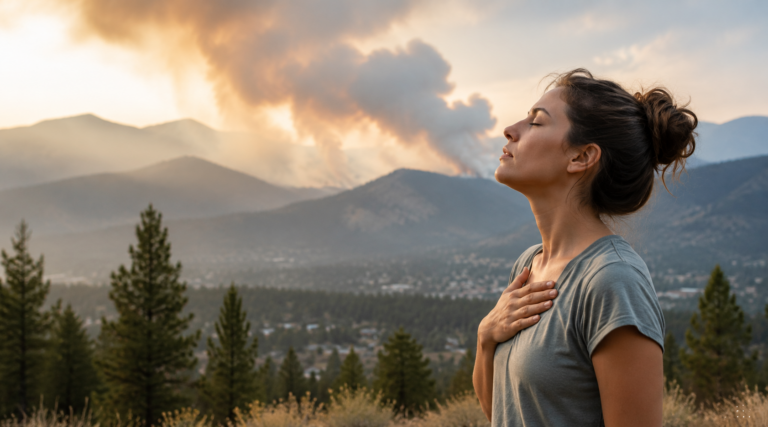
Wildfire smoke is one of the most common environmental triggers for asthma during Colorado’s fire season. Even people whose asthma is usually well controlled can experience worsening symptoms when smoke fills the air. The Allergy, Asthma & Immunology specialists at Boulder Medical Center (BMC) explain how wildfire smoke affects asthma, how to reduce your exposure, and when to seek medical care.
Wildfire smoke has become an increasingly common part of summer in Colorado’s Front Range. Even when fires are burning far away, smoke can travel hundreds of miles, reducing air quality here in Boulder County.
For people living with asthma, smoky air isn’t just unpleasant; it can make breathing more difficult and increase the risk of an asthma flare-up.
According to the Colorado Department of Public Health & Environment (CDPHE), wildfire smoke contains fine particulate matter (PM2.5), gases, and other pollutants. These microscopic particles can travel deep into the lungs, making them the primary health concern associated with wildfire smoke exposure.
Why Does Wildfire Smoke Trigger Asthma?
Asthma causes the airways to become inflamed and sensitive. Wildfire smoke adds another source of irritation, narrowing the airways and making breathing more difficult.
Even short periods of smoke exposure may trigger symptoms such as:
- Coughing
- Wheezing
- Chest tightness
- Shortness of breath
- Increased use of a rescue inhaler
- Fatigue during physical activity
Some people experience symptoms immediately, while others may notice worsening asthma several hours after being outdoors.
Who Is Most at Risk?
Although wildfire smoke can affect everyone, it poses a greater risk for:
- Children with asthma
- Adults with asthma
- Older adults
- People with chronic lung disease, including COPD
- Pregnant individuals
- People with heart disease
Children are especially vulnerable because their lungs are still developing and they breathe more air relative to their body size than adults do.
Reduce Your Exposure to Wildfire Smoke
Check the Air Quality
Before heading outdoors, check the Air Quality Index (AQI) for your area. Most AQI websites and weather apps use a color-coded scale ranging from Good (green) to Hazardous (maroon) and provide recommendations for outdoor activities.
If air quality reaches “Unhealthy for Sensitive Groups” or higher, people with asthma should reduce prolonged outdoor activity whenever possible. Because smoke conditions can change rapidly, check the AQI before exercising, working outdoors, hiking, or attending outdoor events.
Create Cleaner Indoor Air
During smoky conditions:
- Keep windows and doors closed.
- Run your home’s air conditioning on the recirculate setting, if possible.
- Use a portable HEPA air purifier to reduce indoor smoke particles.
- Avoid burning candles, using fireplaces, or anything else that adds indoor smoke.
- Stay on Top of Your Asthma Treatment Plan
Make Sure Your Asthma Is Well Controlled Before Smoke Arrives
“Wildfire smoke is a significant trigger for many people with asthma, especially when it overlaps with Colorado’s allergy season,” says Katie McCormack, MD, board-certified allergist at Boulder Medical Center. “Before smoke arrives, make sure you have your asthma medications available, check that your inhalers aren’t expired, and confirm that you still have doses remaining. Being prepared before air quality worsens can help you stay ahead of asthma symptoms.”
Be sure to:
- Continue taking your controller medications as prescribed.
- Carry your rescue inhaler with you.
- Refill prescriptions before wildfire smoke becomes a problem.
- Check that your rescue and controller inhalers have medication remaining and are not expired.
- Review your Asthma Action Plan with your healthcare provider.
If you don’t already have an Asthma Action Plan, your allergist can help create one that’s tailored to your symptoms and treatment.
Signs Your Asthma May Be Worsening
If your asthma symptoms become more frequent or your current treatment plan isn’t providing the control you’re used to, don’t ignore those changes.
Contact your healthcare provider if you notice:
- You’re using your rescue inhaler more often than usual.
- Your symptoms aren’t improving with medication.
- You’re coughing or wheezing more frequently.
- Asthma is interrupting your sleep or limiting your normal activities.
“If your asthma symptoms are increasing or your Asthma Action Plan isn’t keeping them well controlled, we encourage our patients to schedule an appointment,” says Laura Norman, PA-C, certified physician assistant and allergy practitioner at BMC.
Seek Emergency Medical Care Immediately If You Experience:
- Severe shortness of breath
- Difficulty speaking because of breathing problems
- Blue lips or fingertips
- Rescue medication that isn’t providing relief
- Frequently Asked Questions
- Can wildfire smoke trigger an asthma attack?
Yes. Fine particles in wildfire smoke can irritate the airways and trigger asthma attacks—even in people whose asthma is usually well controlled.
Frequently Asked Questions
Should I exercise outside when the air is smoky?
If the AQI reaches “Unhealthy for Sensitive Groups” or higher, consider moving workouts indoors or postponing strenuous outdoor activity until air quality improves.
Should I continue taking my controller inhaler?
Yes. Continue taking your controller medication exactly as prescribed, even if you’re feeling well. Keeping asthma under good control may help reduce flare-ups during wildfire season.
Do I need to wear an N95 mask?
If you must spend time outdoors during periods of poor air quality, a properly fitted N95 respirator can help reduce your exposure to fine smoke particles. Cloth face coverings and standard surgical masks do not effectively filter wildfire smoke.
What resources can I use to find out if the air quality is poor where I live?
Several reliable resources can help you monitor air quality during Colorado’s wildfire season:
- Colorado Department of Public Health & Environment (CDPHE): Provides Colorado-specific air quality advisories, smoke forecasts, and current Air Quality Index (AQI) conditions. This is one of the best sources for local wildfire smoke updates.
- EPA AirNow website and AirNow app: The U.S. Environmental Protection Agency’s AirNow website and free mobile app provide real-time AQI readings, wildfire smoke maps, forecasts, and location-based health recommendations.
- Local television weather forecasts: During wildfire season, most Colorado television stations include daily air-quality forecasts and smoke conditions in their weather reports. This can be especially helpful for older adults who regularly watch local news.
Tip: If you have asthma, check the AQI each morning and again before spending extended time outside. Smoke conditions can change quickly throughout the day, even when the nearest wildfire is hundreds of miles away.
Let’s Talk
If wildfire smoke is making your asthma harder to manage, the Allergy, Asthma & Immunology specialists at Boulder Medical Center can help evaluate your symptoms, review your treatment plan, and recommend strategies to keep you breathing easier throughout wildfire season.
Meet our team and schedule an appointment