
Wildfires and Allergies: Are You Allergic to Smoke?
August 12, 2026 | 7 min read
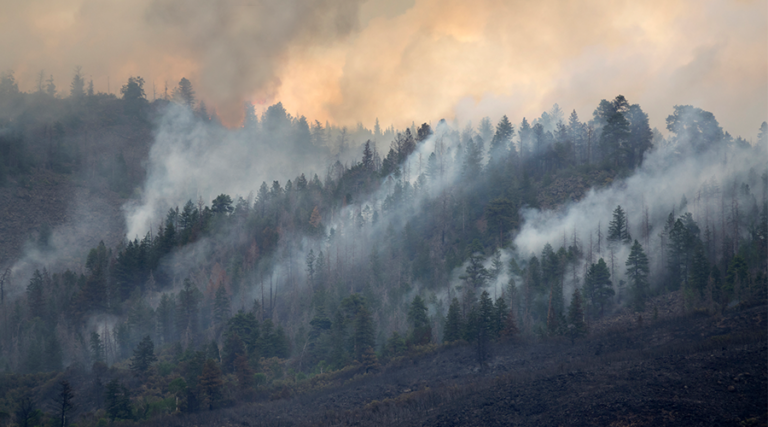
Wildfire smoke doesn’t cause allergies, but it can make allergy symptoms feel much worse. Smoke particles irritate the eyes, nose, and airways, making already-inflamed tissues more sensitive and seasonal allergies more difficult to control. Dr. Katie McCormack, board-certified allergist at Boulder Medical Center, explains why wildfire smoke affects people with allergies, how to reduce your exposure, and when to seek care.
Colorado’s wildfire season often brings hazy skies and poor air quality to communities far from the actual fires. Even when wildfires are burning hundreds of miles away, smoke can drift across the Front Range and linger for days.
If you have seasonal allergies, you may notice your symptoms suddenly become more intense, even if pollen counts haven’t changed.
The reason isn’t that you’re allergic to smoke. Instead, wildfire smoke acts as an irritant, aggravating already-sensitive tissues and making allergy symptoms more difficult to manage.
According to the Colorado Department of Public Health & Environment (CDPHE), wildfire smoke contains fine particulate matter (PM2.5), gases, and other pollutants. These microscopic particles are a primary health concern because they can be inhaled deep into the respiratory tract and irritate the eyes, nose, throat, and lungs.
While anyone can experience irritation from wildfire smoke, people with seasonal allergies may find their symptoms especially bothersome because their nasal passages and eyes are already inflamed.
Can You Be Allergic to Wildfire Smoke?
Typically, no. Wildfire smoke is not an allergen like tree pollen, grass pollen, ragweed, mold, or pet dander. Instead, it is an irritant.
When smoke enters your nose and airways, it can increase irritation and inflammation, making existing allergy symptoms feel worse. Many people experience increased congestion, sneezing, watery eyes, or sinus irritation during smoky conditions, even though they are not having an allergic reaction to the smoke itself.
Why Do My Allergy Symptoms Feel Worse?
If you have allergic rhinitis, also known as hay fever, your immune system is already reacting to allergens such as pollen. Wildfire smoke adds another layer of irritation, making symptoms more noticeable and sometimes more difficult to control.
Common symptoms include:
- Nasal congestion
- Sneezing
- Runny nose
- Itchy or watery eyes
- Scratchy throat
- Sinus pressure
- Postnasal drip
Smoke irritation may also make your usual allergy medications seem less effective until air quality improves.
Who Is Most Sensitive to Wildfire Smoke?
Wildfire smoke can irritate anyone, but some people are more likely to experience symptoms, including:
- People with seasonal or year-round allergies
- Children
- Older adults
- People with asthma or other chronic lung conditionsPregnant individuals
Children are especially sensitive because their lungs are still developing, they breathe more air relative to their body size than adults, and they often spend more time outdoors during the summer.
How to Reduce Your Exposure to Wildfire Smoke
Check the Air Quality
Before heading outdoors, check the Air Quality Index (AQI) for your area. Most AQI websites and weather apps use a color-coded scale ranging from Good (green) to Hazardous (maroon) and provide recommendations for outdoor activities.
If air quality reaches “Unhealthy for Sensitive Groups” or higher, people with asthma should reduce prolonged outdoor activity whenever possible. Because smoke conditions can change rapidly, check the AQI before exercising, working outdoors, hiking, or attending outdoor events.
Create Cleaner Indoor Air
During smoky conditions:
- Keep windows and doors closed.
- Run your home’s air conditioning on the recirculate setting, if possible.
- Use a portable HEPA air purifier to reduce indoor smoke particles.
- Avoid burning candles, using fireplaces, or anything else that adds indoor smoke.
- Stay on top of your Asthma Treatment Plan
Stay on Top of Your Allergy Medications
Continue taking your allergy medications as directed. Depending on your symptoms, your allergist may recommend:
- Daily antihistamines
- Nasal corticosteroid sprays
- Saline nasal rinses to help remove pollen and smoke particles
- Allergy eye drops
If your symptoms become harder to control during wildfire season, your allergist may recommend adjusting your treatment plan.
When Should I See an Allergist?
Schedule an appointment if:
- Your allergy symptoms remain severe despite medication.
- Symptoms interfere with sleep or daily activities.
- You’re unsure whether allergies, wildfire smoke, or another condition cause your symptoms.
- You experience recurring sinus irritation or congestion during wildfire season.
Your allergist can help determine what’s contributing to your symptoms and recommend treatments for better long-term control.
Frequently Asked Questions
Can wildfire smoke cause allergies?
No. Wildfire smoke doesn’t cause allergic reactions, but it can irritate your eyes, nose, throat, and airways, making existing allergy symptoms feel worse.
How can I tell if it’s allergies or wildfire smoke?
Seasonal allergies are caused by your immune system reacting to allergens such as pollen, while wildfire smoke is an irritant. Allergies often cause itching of the eyes, nose, or throat, while wildfire smoke is more likely to cause burning eyes, throat irritation, coughing, or a smoky odor. During wildfire season, many people experience both at the same time, making symptoms feel more intense.
Why are my eyes burning even when pollen counts are low?
Smoke particles can irritate the eyes independently of pollen, leading to redness, burning, watering, and discomfort.
Should I exercise outside when it’s smoky?
If the Air Quality Index is “Unhealthy for Sensitive Groups” or higher, consider moving workouts indoors or postponing strenuous outdoor activity until air quality improves. If you’re unsure what’s appropriate for your health, talk with your healthcare provider or allergist.
Can a facemask help my allergy symptoms?
If you spend time outdoors during periods of poor air quality, a properly fitted N95 respirator can help reduce your exposure to fine smoke particles. Cloth face coverings and standard surgical masks do not effectively filter wildfire smoke.
What resources can I use to find out if the air quality is poor where I live?
Air quality can change quickly during wildfire season, so it’s a good idea to check current conditions before spending extended time outdoors. Several resources make it easy to monitor the Air Quality Index (AQI) and wildfire smoke in your area:
What resources can I use to find out if the air quality is poor where I live?
Several reliable resources can help you monitor air quality during Colorado’s wildfire season:
- Colorado Department of Public Health & Environment (CDPHE): Provides Colorado-specific air quality advisories, smoke forecasts, and current Air Quality Index (AQI) conditions. This is one of the best sources for local wildfire smoke updates.
- EPA AirNow website and AirNow app: The U.S. Environmental Protection Agency’s AirNow website and free mobile app provide real-time AQI readings, wildfire smoke maps, forecasts, and location-based health recommendations.
- Local television weather forecasts: During wildfire season, most Colorado television stations include daily air-quality forecasts and smoke conditions in their weather reports. This can be especially helpful for older adults who regularly watch local news.
Because wildfire smoke can move and change throughout the day, check conditions again if the sky becomes hazier, you smell smoke, or you’re planning to spend a significant amount of time outdoors.
Let’s Talk
If wildfire smoke is making your allergy symptoms harder to manage, the Allergy, Asthma & Immunology specialists at Boulder Medical Center can help identify what’s contributing to your symptoms and recommend treatments to help you find lasting relief.
Make an appointment in Boulder or Louisville, Colorado.
Source: Colorado Department of Public Health & Environment (CDPHE), wildfire smoke and health guidance.