
Kids Wear Bike Helmets. What About Eye Protection?
October 14, 2026 | 5 min read
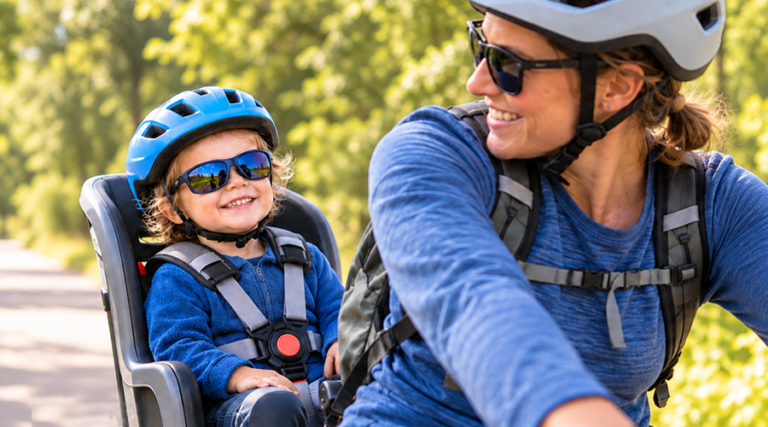
Across Boulder County, families ride bikes to school, explore neighborhood paths, and enjoy time outdoors together. Children and teens pedal their own bikes and e-bikes, while younger children come along in bike seats, cargo bikes, and trailers.
Helmets are often part of getting ready. Glasses or goggles deserve a place in that routine, too.
A simple habit to remember: When the helmet goes on, the glasses or goggles go on.
Whether your family rides for transportation, recreation, or both, appropriate eye protection can make riding more comfortable, help prevent eye injuries, and reduce exposure that contributes to certain eye conditions over time. Starting early helps protect children’s eyes for years to come and builds a lifelong safety habit, just like wearing a bike helmet.
Passengers Need Eye Protection, Too
Children don’t have to be steering the bike to encounter wind, sunlight, dust, or insects. Those riding in front or rear bike seats and open cargo bikes are exposed, too. A trailer may offer some shelter, depending on its design and whether its protective cover is in place.
Before leaving, consider eye protection for everyone coming along. Whether the trip is a short ride to school or an afternoon on a trail, glasses or goggles can be part of your prep.
What Can Happen to Unprotected Eyes?
- Wind Can Dry and Irritate the Eye’s Surface
Moving air can dry out the protective tear film covering the eyes, leading to burning, watering, redness, or a gritty feeling. When the surface becomes dry enough, the delicate cells covering the cornea (the clear front of the eye) can become irritated or damaged. Glasses or goggles with appropriate coverage can help shield eyes from airflow and make riding more comfortable. - Dust, Insects, and Branches Can Cause Injuries
An insect or speck of debris hitting the eye can cause more than a moment of discomfort. Foreign objects can scratch the cornea, causing pain, tearing, light sensitivity, and blurred vision. A branch or another object striking the eye can cause a more serious injury. Appropriate protective eyewear helps create a barrier against these hazards. - Sun Exposure Adds Up Over Time
UV protection matters during childhood and in every season. Repeated exposure to the sun’s ultraviolet rays is associated with cataracts and growths on the eye’s surface. UV-blocking eyewear helps limit that exposure, including on cloudy days. One example is a pterygium, a scar-like growth that can extend from the white of the eye onto the cornea. It can cause redness and irritation and, if it grows large enough, affect vision. Sun exposure is a major contributor; wind and sand exposure can also increase risk. Protective habits beginning in childhood can help lower that risk.
Choosing Glasses or Goggles for Your Child
The right eyewear needs to provide suitable protection and feel comfortable enough to wear throughout the ride.
- Check the UV label. Look for UV400 or 100% UVA and UVB protection. A dark tint alone does not tell you how well lenses block UV rays.
- Look for impact protection appropriate to the activity. Ordinary sunglasses and prescription glasses are not substitutes for protective sports eyewear. Polycarbonate lenses are common in protective glasses and goggles, but the full frame-and-lens combination matters. Ask an eye care professional about suitable options.
- Check the fit with the helmet on. Glasses or goggles should stay in place without pinching, obstructing vision, or interfering with the helmet’s fit. Coverage around the sides can help shield eyes from wind and debris.
- Choose lenses suited to the light. Dark lenses can make it harder to see in low light. Clear protective lenses may be a better choice for evening rides; check their UV rating if you will also use them during daylight.
- Ask about prescription options. Children who need vision correction may benefit from prescription protective eyewear. Their eye care professional can help identify an appropriate option.
Good UV protection does not require a designer brand. Affordable options can provide UV protection, but check the label, fit, and suitability for riding rather than choosing by price alone.
Make It Part of Getting Ready
Pairing glasses or goggles with the helmet gives children one familiar routine to follow before every ride.
- Keep eyewear near the helmet so both are easy to find.
- Let children help choose a pair they like from options that meet their protection needs.
- If they keep removing the eyewear, check for slipping, pinching, fogging, or interference with the helmet.
- Model the habit by putting on your own protective eyewear.
- For teens who increasingly ride independently, checking their helmet and eyewear before leaving can become part of taking responsibility for their safety.
When to Seek Medical Care
If a child injures an eye, seek prompt medical evaluation. Eye injuries can be more serious than they initially appear, and delaying treatment can put vision at risk.
Pain, blurred or decreased vision, light sensitivity, or persistent redness and irritation after a ride deserve attention. Sudden vision loss or a serious impact to the eye requires immediate care.
Let’s Talk
Have questions about protecting your eyes or concerns about irritation, discomfort, or changes in vision? Boulder Medical Center provides comprehensive medical and surgical eye care as part of our local, independent, physician-owned medical group.
Visit the BMC Ophthalmology page to learn about our team, services, and how to schedule an appointment.