
IT Band Syndrome: What Runners Need to Know
April 16, 2026 | 4 min read

Pain on the outside of the knee during a run, hike, bike ride, or workout is often linked to iliotibial (IT) band syndrome. This common overuse injury affects runners, cyclists, and active adults, especially when training volume increases, terrain changes, or recovery is limited.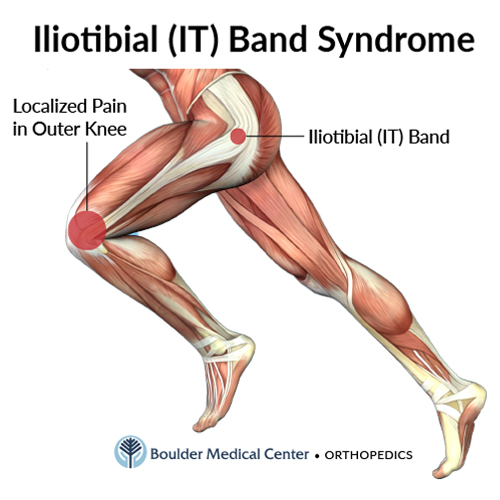
What Is Iliotibial (IT) Band Syndrome?
The iliotibial band, often called the IT band, is a thick band of connective tissue that runs along the outside of the thigh from the hip to just below the knee. It helps stabilize the leg and supports movement during running.
IT band syndrome develops when this tissue becomes irritated from repetitive bending and straightening of the knee. This irritation most commonly occurs near the outside of the knee and can lead to inflammation and pain.
It is one of the more common causes of outer knee pain in runners.
What Causes IT Band Syndrome?
IT band syndrome is usually related to repetitive stress rather than one sudden injury.
Common contributing factors include:
- Rapid increases in running mileage or intensity
- Downhill running or uneven surfaces
- Frequent cycling
- Weak hip or glute muscles
- Tightness in the hips, thighs, or surrounding muscles
- Poor movement mechanics
- Returning to activity too quickly after time away
- Inadequate recovery between workout
Common Symptoms of IT Band Syndrome
The hallmark symptom is pain on the outside of the knee during activity.
Symptoms may include:
- Sharp, aching, or burning pain in the outer knee
- Pain that begins after running or cycling for a period of time
- Symptoms that worsen with continued movement
- Increased discomfort running downhill
- Tightness along the outer thigh
- Pain that may travel toward the hip
- Relief with rest
Swelling is usually minimal or absent.
How Is IT Band Syndrome Diagnosed?
An orthopedic specialist can often diagnose IT band syndrome through:
- A review of symptoms
- Activity and training history
- Physical examination
- Evaluation of hip strength and movement patterns
Imaging, such as X-rays or MRI, may be considered if symptoms continue or another knee condition is suspected.
IT Band Treatment Options
The good news about treating IT band syndrome is that most people improve with conservative treatment. Many begin feeling better within several weeks, though recovery time varies depending on severity and activity level.
Treatment often includes:
- Temporarily reducing mileage or workout intensity
- Avoiding aggravating activities for a short period
- Ice after exercise
- Anti-inflammatory medications, when appropriate
- Physical therapy
- Gradual return to activity
In more persistent cases, corticosteroid injections may sometimes be considered. Surgery is rarely needed.
Why Physical Therapy Often Helps
Targeted physical therapy can address the underlying causes of IT band irritation rather than only the symptoms.
A program may include:
- Mobility and Flexibility
- Stretching the quads, hamstrings, and glutes
- Foam rolling when appropriate
- Improving hip mobility
- Strengthening
- Hip abductor strengthening
- Gluteus medius activation
- Core stability work
- Balance and single-leg control exercises
- Hands-On Techniques
- Manual therapy
- Soft tissue work
- Dry needling
- Joint mobilization when indicated
How to Prevent IT Band Syndrome
Helpful prevention strategies include:
- Increase training gradually
- Warm up before exercise
- Strengthen hips and glutes consistently
- Rotate training surfaces when possible
- Replace worn footwear
- Build recovery days into training
- Address mild pain early before it worsens
When to Seek Care
Consider an evaluation with an orthopedic specialist if:
- Pain keeps returning
- Symptoms interfere with exercise
- Rest has not improved symptoms
- Knee pain changes walking or movement patterns
- Pain becomes more frequent or intense
Let’s Talk
Dealing with knee pain or a sports-related injury? Schedule an evaluation with Kat Makowski, PA-C, at BMC Orthopedics in Boulder or Louisville. Kat provides compassionate, evidence-based care to help patients get back to the activities they love.
References
- Strauss EJ, Kim S, Calcei JG, Park D. Iliotibial band syndrome: evaluation and management. J Am Acad Orthop Surg. 2011;19(12):728-736.
- Fredericson M, Wolf C. Iliotibial band syndrome in runners: innovations in treatment. Sports Med. 2005;35(5):451-459.
- Khaund R, Flynn SH. Iliotibial band syndrome: a common source of knee pain. Am Fam Physician. 2005;71(8):1545-1550.