
Dr. Jenna Peart, MD
Board-Certified Dermatologist
Boulder Medical Center
Ever been overwhelmed by the number of serums, gels, masks, lotions, creams, and sunscreen options out there? How many products do you need to protect your skin and fight aging adequately? It’s really much simpler than you might think. Let’s dive in.
Foundations of Healthy Skin
Here are the basics of what we want out of our skincare routines:
- Protection from UV Radiation: This is the most important. Anything else you’re using to fight the aging of your skin or improve its appearance will be undone by excessive sun exposure. So without this step, the rest really aren’t worth doing.
- Hydration: In this dry Colorado climate, our skin constantly loses water. Keeping it well hydrated will protect it from irritation and make it look plumper and healthier.
- Anti-Aging: Picking key science-backed ingredients in your skin products that help reverse some sun damage and promote new collagen formation can make a huge difference in your skin.
My Simple Skin Care Routine
Based on the above skin care basics, my skincare routine is relatively quick and straightforward:
Morning
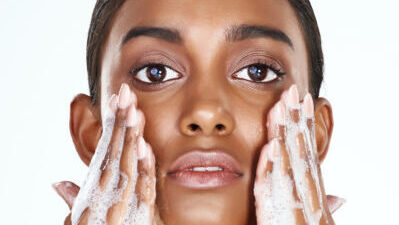
- Wash your face with a gentle, non-soap cleanser such as Vanicream Face Wash or CeraVe Foaming Facial Cleanser. If you have oily or acne-prone skin, you might swap this for a salicylic acid or benzoyl peroxide-containing face wash instead.
- Apply a vitamin C-based serum to your face and neck. Vitamin C helps protect the skin from free radical damage caused by sun exposure, pollution, and infrared radiation, while also enhancing brightness and evening skin tone. It’s essential to choose a well-formulated product from a reputable skincare line. If the concentration isn’t within the optimal range or the serum isn’t packaged in an opaque container, you won’t get the full benefit. Prequel Lucent-C is an excellent option because it’s affordable (available at Target) and contains a high concentration of L-ascorbic acid, the most potent form of vitamin C.
- Apply a broad-spectrum sunscreen or a moisturizer with SPF 30 or higher to your face and neck. Rub any leftover sunscreen onto the backs of your hands. Don’t skip this step—even if you don’t plan to be outside. UVA rays can pass through car and home windows, contributing to skin aging even when you’re not directly in the sun. If you’re prone to pigment concerns like melasma, choose a tinted sunscreen. These formulas contain iron oxide, which helps protect your skin from visible light that can worsen pigmentation. Some excellent options include EltaMD UV Clear (great for acne-prone skin), Alastin Hydratint (for makeup-like coverage), and Korean sunscreens such as Round Lab Birch Juice Moisturizing Sun Cream or Innisfree Green Tea Hyaluronic Sun Serum.
Evening
-
Rewash your face with a gentle, non-soap cleanser. Then apply a retinoid cream, such as over-the-counter retinol or prescription tretinoin. These vitamin A-based products offer several exceptional benefits: they help prevent acne, minimize fine lines, promote new collagen formation, and even out skin tone and texture. Retinoids are truly the anti-aging workhorse and a staple in nearly every dermatologist’s routine.
Make sure your face is completely dry before applying, and remember that you only need a pea-sized amount for your entire face. Because retinoids can be drying and irritating, I recommend starting with two nights per week for the first month and gradually increasing frequency as tolerated. If you have trouble with retinoid sensitivity, a good alternative is a peptide-based product like Alastin’s Restorative Skin Complex, which has been shown to support collagen production with less irritation.
-
Apply a moisturizer after you’ve fully absorbed the retinoid cream into your skin. This helps prevent excessive dryness, which is common when using retinoids. If you have acne-prone or oily skin, choose a non-comedogenic moisturizer (meaning it won’t clog your pores). Otherwise, your ideal moisturizer may vary depending on your skin’s dryness level and the time of year—you may prefer a lighter formula in warmer months and a richer one in winter. In general, fragrance-free products are best.
For an added anti-aging boost, consider a peptide-containing moisturizer. Peptides are small molecules that help stimulate collagen and elastin production. Good options include CeraVe Skin Renewing Night Cream and Naturium Multi-Rich Peptide Moisturizer or Cream (great for very dry skin).
And that’s pretty much it! When all is said and done, three steps each morning and each evening take less than three minutes.
Sun Protection
If you’re spending time outdoors, remember to reapply sunscreen every two hours and cover exposed skin whenever possible with lightweight, sun-protective clothing and a broad-brimmed hat. It’s also helpful to use a lip balm with SPF to protect your lips’ delicate skin while you’re out and about.
 About Jenna Peart, MD
Dermatology at Boulder Medical Center

Dr. Jenna Peart is board-certified by the American Academy of Dermatology. She earned her Bachelor of Arts in International Studies from Boston College, graduating magna cum laude and as a member of the Alpha Sigma Nu Honor Society. She completed her medical degree at the University of Pennsylvania, where she graduated in the top 10 of her class and was inducted into the Alpha Omega Alpha Medical Honor Society. Dr. Peart then moved to Denver to complete her internship at Presbyterian St. Luke’s Hospital, followed by dermatology residency training at the University of Colorado.
Dr. Peart is inspired by “the reward of seeing someone’s skin condition improve dramatically, and knowing how much that improvement can boost self-confidence and enhance a person’s daily quality of life.”
Learn more:
- Learn More About Dr. Peart
- Call to Make an Appointment: (303) 440-3013