
By Laura Norman, PA-C
Dermatology at Boulder Medical Center
Red light therapy has gained attention as a non‑invasive option for improving skin texture, tone, and visible signs of aging. At‑home red light masks, which use LED (light‑emitting diode) technology, are now widely available and marketed for wrinkle reduction, collagen stimulation, and overall skin rejuvenation. In this article, Laura Norman, PA‑C, with Boulder Medical Center Dermatology, explains how at‑home red light masks work, what the science shows, what results to expect, and important safety considerations to keep in mind, especially around eye protection.

What Are At-Home Red Light Masks?
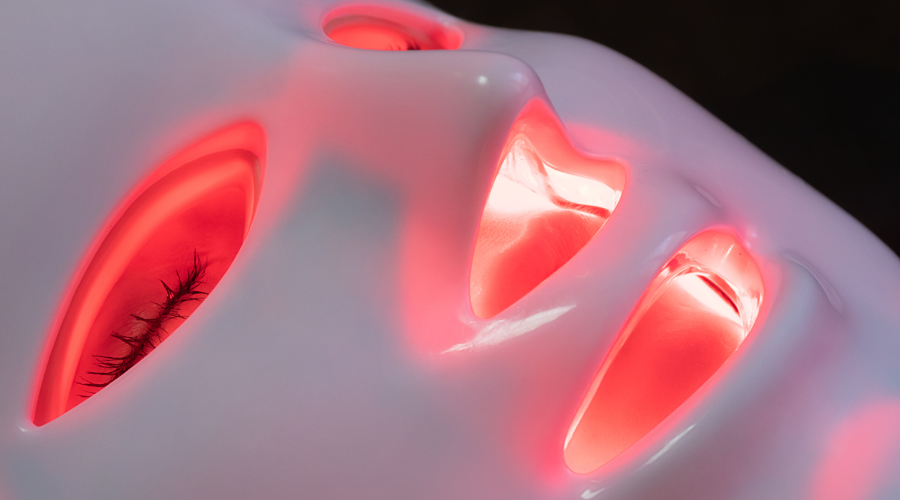
At-home red light masks are wearable devices that use light-emitting diodes (LEDs) to deliver red and near-infrared light to the face. These masks are designed for convenient home use and work through photobiomodulation, which stimulates your skin cells to promote healing and rejuvenation.
How Do Red Light Masks Work?
Red light (630–760 nm) and near-infrared light (760–1200 nm) penetrate your skin and are absorbed by structures in your cells called mitochondria. This triggers several beneficial effects:
- Increased energy production in skin cells
- Stimulation of collagen and elastin production
- Reduced inflammation
- Improved circulation
What Can Red Light Masks Help With?
Clinical studies on at-home LED masks have shown improvements in:
- Fine lines and wrinkles
- Skin texture and tone
- Skin firmness and elasticity
- UV spots and brown spots
- Pore appearance
- Overall youthful appearance
What Results Can I Expect?
Results vary between individuals, but clinical studies suggest:
- Some improvements may be visible in as few as 6 weeks
- More significant results typically appear after 12–16 weeks of consistent use
- Continued use is generally needed to maintain results
- Results are gradual and subtle compared to other choices, such as sunscreen use, retinoids, and in-office procedures
How to Use Your Mask
Most at-home LED masks are designed for daily use. General guidelines include:
- Clean your face before use
- Use the mask for the recommended time (typically 10–20 minutes per session)
- Follow the manufacturer’s instructions for your device
- Be consistent. Regular use is key to seeing results
- Most devices are designed for daily use
Are At-Home Red Light Masks Safe?
At-home LED devices generally have favorable safety profiles with few significant adverse events. Red light therapy is considered non-invasive and does not cause DNA damage like ultraviolet light.
However, there are important safety considerations.
Eye Protection Is Essential
This is the most important safety concern. Some LED masks emit blue light, which can cause retinal damage if the eyes are not properly protected. At least one case of photochemical retinopathy (retinal damage) has been reported in association with a blue LED face mask when eye protection was not used properly.
- Always use the eye protection provided with your device
- Keep your eyes closed during treatment
- If your mask emits blue light, be especially careful about eye protection
- Never look directly at the LED lights
Other Safety Considerations
- Mild, temporary skin redness may occur, but it typically resolves quickly
- LED therapy has been studied for use near the thyroid gland and has shown no significant effects on thyroid function
- There are no studies specifically during pregnancy regarding any safety concerns
Choosing an At-Home Red Light Mask
Not all LED masks are created equal. When selecting a device, consider:
- FDA clearance: Look for devices that have been cleared by the FDA for marketing in the United States
- Wavelength: Effective devices typically use red light (around 630–660 nm) and/or near-infrared light (around 830–850 nm)
- Power output: Higher quality devices will specify their power output (irradiance)
- Eye protection: Ensure the device includes adequate eye protection
- Reputable manufacturer: Choose established brands with published clinical data
Important Limitations
While at-home LED masks show promise, there are some important points to understand:
- Results are typically more modest than professional in-office treatments
- The quality and effectiveness of consumer devices vary significantly
- Research on home devices is still limited, with many studies having small sample sizes
- Some studies are funded by device manufacturers, which may introduce bias
- Optimal treatment parameters (how long, how often, what power) are still being established
When to See a Dermatologist
Consider consulting a dermatologist if:
- You have a skin condition that needs diagnosis or treatment
* You want to discuss whether an LED mask is appropriate for your skin concerns
* You experience any unexpected side effects
* You want guidance on choosing a quality device
* You are interested in more intensive professional treatments or guidance on general anti-aging
The Bottom Line on At-Home Red-Light Masks
At-home red light masks are a safe, non-invasive option for skin rejuvenation that may help improve fine lines, wrinkles, and skin texture with consistent use over several weeks to months. While results are typically more modest than professional treatments, the convenience of home use makes them an attractive option for many people. The most important safety consideration is protecting your eyes during use. For optimal results, select a high-quality device and use it consistently as directed.
About Laura Norman, PA‑C
Dermatology at Boulder Medical Center
Laura Norman, PA‑C, is part of the dermatology team serving patients in Boulder, Longmont, and Louisville, Colorado. Laura provides comprehensive dermatologic care and enjoys helping patients make informed decisions about skin health, anti‑aging options, and at‑home treatments.
To schedule an appointment, call (303) 440‑3013.
Disclaimer: This article is intended for general informational purposes only and is not a substitute for professional medical advice, diagnosis, or treatment. Always seek the guidance of your physician or another qualified healthcare provider with any questions you may have regarding a medical condition. If you are experiencing severe or worsening symptoms, seek immediate medical attention.