
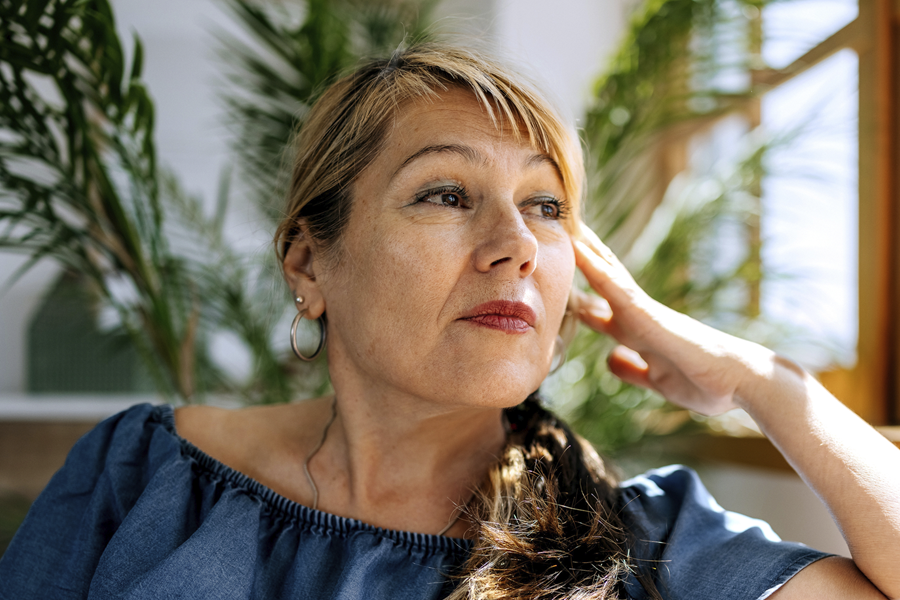
Women experiencing perimenopause and menopause often notice skin changes, including dryness, thinning, wrinkles, itching, and loss of firmness. These changes are caused by declining estrogen levels, which affect collagen, hydration, and the skin barrier. In this article, board-certified dermatologist Jenna Peart, MD, explains how menopause affects the skin, what symptoms are normal, and what treatments can help. Dr. Peart provides dermatology care at Boulder Medical Center in Boulder, Erie, Longmont, and Louisville, Colorado.
By Jenna Peart, MD
Dermatology at Boulder Medical Center
Perimenopause and Menopause: What’s Happening to Your Skin?
During perimenopause and menopause, declining estrogen levels lead to noticeable changes in your skin. These changes affect multiple layers of the skin and include dryness, thinning, increased wrinkling, loss of elasticity, and slower wound healing.
Your skin is actually an endocrine organ with estrogen receptors, making it particularly sensitive to hormonal changes.
The most significant change is collagen loss. Studies show a strong correlation between skin collagen loss and estrogen decline.
During the first five years after menopause, you can lose up to 30% of your skin’s collagen content, which directly affects skin thickness, elasticity, and firmness.
This collagen atrophy is a significant contributor to the visible signs of skin aging during this period.
Common Skin Changes You May Notice
- Dryness and Reduced Moisture
Your skin’s ability to retain water decreases due to changes in the skin barrier and reduced production of natural moisturizing factors, such as glycosaminoglycans. This leads to increased transepidermal water loss and that uncomfortable, dry, tight feeling. - Thinning and Loss of Firmness
The epidermis (outer layer) becomes thinner, and dermal thickness decreases as collagen and elastic fibers break down. This makes skin more fragile and susceptible to injury and bruising. - Wrinkles and Sagging
Loss of collagen, elastin, and hyaluronic acid contributes to the formation of wrinkles and decreased skin elasticity. Your skin becomes more extensible (stretchy) but less elastic (able to bounce back). - Itching (Pruritus)
Many women experience increased skin itchiness, often related to dryness. - Slower Wound Healing
Estrogen influences inflammation, tissue repair, and re-epithelialization, so wounds may take longer to heal after menopause. - Changes in Skin Barrier Function
Menopause alters the ceramide composition in your skin’s outer protective layer, which can compromise barrier function and worsen dryness.
What Can Help
- Discuss Hormone Therapy with Your Doctor
While hormone replacement therapy (HRT) is not indicated for skin symptoms alone, studies show it can improve skin thickness, collagen content, moisture, elasticity, and barrier function. If you’re considering HRT for other menopausal symptoms like hot flashes, the skin benefits may be an additional advantage worth discussing. - Optimize Your Skincare Routine
Use gentle cleansers and apply moisturizers immediately after bathing to lock in hydration. Look for products containing ceramides, hyaluronic acid, and other humectants that help the skin retain moisture. - Consider Topical Treatments
Topical retinoids, peptides, and vitamin C serums can support collagen production and improve skin appearance. See here for more information about building an optimal skincare regimen. - What About Topical Estrogen?
The evidence for topical estrogen creams in treating facial aging is mixed. Some studies show benefits for skin thickness, collagen content, and wrinkle reduction, while others, particularly in sun-damaged skin, show no improvement or even potentially harmful effects. One study found that topical estrogens can increase the activity of enzymes that break down collagen, suggesting they may worsen collagen loss in some cases. There is much stronger data supporting the use of topical retinoids and peptides for collagen production and texture improvement, so I do not routinely recommend topical estrogen creams for the treatment of facial aging. - Daily Broad-Spectrum Sunscreen is Essential
Apply at least an SPF30+ every day to the face, neck, chest, and backs of the hands. - Maintain Healthy Lifestyle Habits
Adequate hydration, a balanced diet rich in antioxidants, regular exercise, good quality sleep, not smoking, and stress management all support overall skin health. - Professional Treatments
Dermatological procedures such as laser therapy, chemical peels, and microneedling may address specific concerns, such as wrinkles and texture changes. Consult a dermatologist for personalized recommendations.
When to Seek Professional Help
Contact your dermatology provider if you experience:
- Severe or persistent itching that interferes with daily life or sleep
- New or changing skin lesions
- Wounds that heal very slowly or become infected
- Concerns about the overall health or appearance of your skin
Remember that skin changes during menopause are a normal part of hormonal transition, but they don’t have to be accepted without intervention. Many effective options are available to help maintain skin health and appearance during this stage of life.
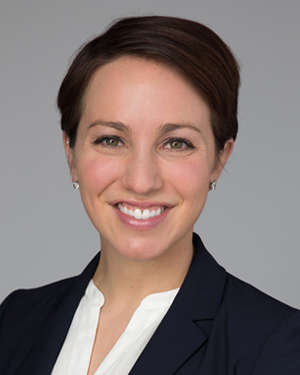
Jenna Peart, MD, Dermatologist
About Jenna Peart, MD, FAAD
Board-Certified Dermatologist in Boulder, Louisville, and Longmont, Colo.
Jenna Peart, MD, provides comprehensive medical, surgical, cosmetic, and pediatric dermatology care, including: acne, psoriasis, hidradenitis suppurativa, atopic dermatitis, vulvar skin conditions (including lichen sclerosus), skin cancer treatment and benign growth removal, cosmetic injectables, Halo™ and BBL laser treatments, and more.
Learn more
-
- Learn More About Dr. Peart
- Call to Make an Appointment: (303) 440-3013
- Visit Dr. Peart on Instagram for easy, everyday skincare tips
Disclaimer: This article is intended for general informational purposes only and is not a substitute for professional medical advice, diagnosis, or treatment. Always seek the guidance of your physician or another qualified healthcare provider with any questions you may have regarding a medical condition. If you are experiencing severe or worsening symptoms, seek immediate medical attention.